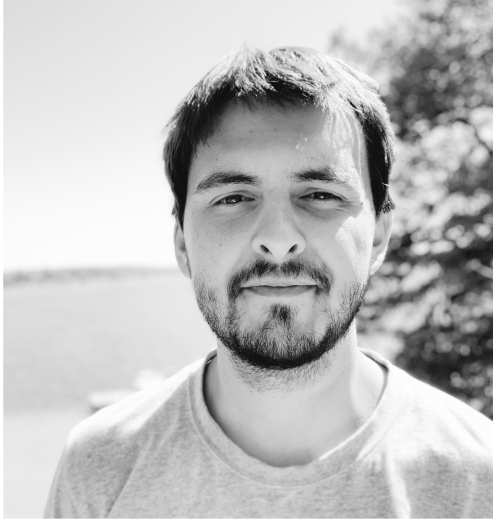
Eric Takman

Who's Eric? 🤨

Eric Takman

Hello 👋

I am a structured, analytical, and communicative system developer who enjoys being involved in the entire development process. My ambition is to work cross-functionally as a full-stack developer, and I thrive in teams where I can contribute my knowledge and experience. I have a background in communication and worked as a communicator at an architectural firm in Stockholm before I chose to change my path and train to become a system developer. People I have worked with have described me as a committed and curious colleague who is good at creative problem-solving and analysis. There are no problems I don’t want to solve, and I am a person driven by constantly learning new things in what I do.

My background lies in graphic design, communication, and visualization, which has been of great benefit as a developer. I am a developer who enjoys bouncing ideas around and always does my utmost to deliver high-quality and innovative solutions.

I have put together this web portfolio so that those interested in getting to know me better can go through who I am and what I have done.

You can also call me Ruffe 😉
Computer Science

August 2020 - June 2023

Uppsala university

Computer Science Program with a Focus on Software Engineering

During my education, we worked on various software projects within web, desktop, and mobile applications, all with integration into a backend database. The program also had a strong focus on the organizational and methodological aspects of the developer’s role, as well as the importance of clean code and design patterns.

During my education, I completed both a six-month internship and larger software projects at PayEx, a subsidiary of Swedbank that offers payment solutions for retail and e-commerce. During the internship, we were tasked with quality assurance and testing of an older system in a small team, and in the other project, we explored the possibilities of building an API for a data lake. It became clear how important Scrum and other agile methods are for large teams and systems.

PayEx

September 2022 - January 2023

Internship with focus on quality assurance

Internship

During the autumn of 2022, I, along with two other students, completed an internship at PayEx. Here, we were tasked with investigating and ensuring the quality of one of their legacy systems. It was a close collaboration with developers, product owners, and customer service. In the assignment, we had the freedom to outline the project’s progress and plan for what we could potentially solve during the duration of our internship.

You can read more about PayEx here 👉 PayEx

Meshbase

January 2023 - ongoing

Data mesh manager

Web-Based Data Mesh Manager

This is my flagship project that originated from my desire to learn more about GraphQL. Initially, the idea was to build a web service for small businesses and startups to manage invoices. However, once I set up the project’s architecture, I realized that I had the foundation for a project I wanted to continue developing. Since I don’t have a huge interest in finance, I decided to turn my focus towards something I’m passionate about, which is data.

What I am currently building is a web application for companies to manage their data as products according to the data mesh concept, an idea for database architecture presented by Zhamak Dehghani in December 2020 on martinfowler.com.

The project is built using Ktor for backend handling and GraphQL for APIs. The frontend is built with React in Next.js and Typescript. I have also used Docker to manage the database and to run the project locally with a MongoDB database.

Currently, the project repository is private on Github, but I hope to open up the project for open source contribution in the near future.

Follow Zhamak on Twitter (X) or check out her company Next Data! 👏

Smidefix

Mars 2023

NPM package with icons for Svelte

NPM Package 📦

My interest in graphic design led me to start sketching icons that can be used on various websites and apps. After a while, I decided to explore how to create an NPM package and publish these icons. I chose to use Svelte to create the icons and build the package.

If you’re interested in using the icons, you can install the package with npm in your next Svelte project:

npm install svelte-smidefix

Check out the package on npmjs.com or explore the code on GitHub.

PayEx

Mars 2022 - June 2022

Project with focus on data lake and API

Projects 🚀

During my education in system science, I, along with two other students, worked on a project for PayEx. The project aimed to create a prototype for a new service that would make it easier for the company to assist customers in obtaining customized balance statements. In the project, we were tasked with exploring possible solutions for an API with integration into a data lake. We created a prototype using serverless functions in Azure and GraphQL, which could dynamically fetch the relevant data for the customer’s balance statement based on selected parameters.

You can read more about PayEx here 👉 PayEx

MushroomPi

July 2022 - ongoing

Mushroom cultivation with Raspberry Pi

Mushroom Cultivation with Raspberry Pi 🍄

MushroomPi is a project designed to serve as a tool for enthusiasts who want to cultivate mushrooms at home. The project is built in Svelte using SvelteKit and utilizes a Raspberry Pi to control a fan and measure temperature with a thermometer. The idea is that mushroom growers, with the help of a box and a Raspberry Pi, can control and analyze data about their mushrooms. In the backend, Python is used to control the Raspberry Pi, and CockroachDB is used to store data.

MushroomPi is currently a private repository, but I hope to open up the project for open source contributions soon.

AG arkitekter AB

November 2019 - April 2020

Communicator

Communicator at AG Arkitekter AB

As a communicator at AG, I was responsible for administration, business development, and the graphic profile. Since I was the only communicator, the work was self-driven while also requiring close collaboration with architects and construction engineers.

During my time at AG, I worked on various aspects of communication and administration. Unfortunately, they had to lay off all new hires when the pandemic hit, and it gave me time to think about what I wanted to do. Although I appreciate working in communication, I realized that I prefer operational work and chose to train as a system developer.

You can see more about AG here 👉 ag arkitekter

Architecture, Visualization, and Communication

September 2015 - June 2018

Malmö university

Bachelor’s Degree in Built Environment at Malmö University

My bachelor’s degree in Built Environment with a focus on Architecture, Visualization, and Communication included courses in project management, digital media, visual communication, and strategic communication with a focus on the built environment.

During my studies, we worked on several aspects within the construction sector. This included preliminary studies to analyze and evaluate construction projects, visualization of architectural drawings to communicate design ideas and plans, as well as the development of communication plans to effectively reach various stakeholders and target audiences.

I developed competencies in both technical and creative areas, which gave me a broad understanding of how to use communication and visualization to successfully present and convey ideas within the built environment.

SUM Magazine

September 2017 - Mars 2018

Malmö University Student Magazine

Packar upp SUM Magazine

Editor-in-Chief at Malmö University Student Magazine ✍

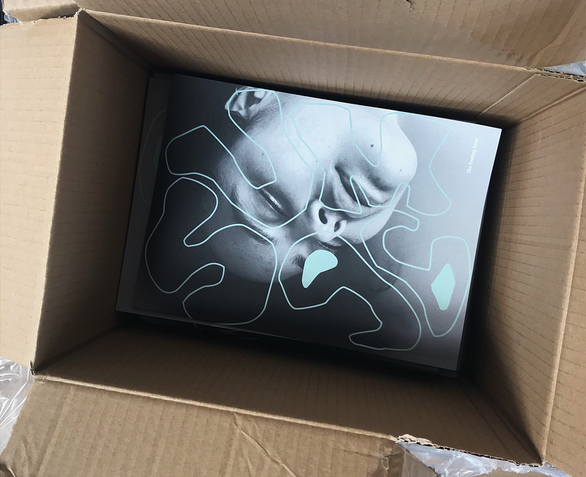
Together with a classmate, I took on the role of editor-in-chief at Malmö University’s magazine, SUM Magazine. The magazine had been around for a while and was previously named Mahskara. Since the ‘h’ in the name indicated “university college,” and the school was transitioning to university status during our time as editors, we decided to update the magazine’s name to SUM (Student Union Magazine). Being the editor-in-chief of the magazine involved everything from recruiting writers, illustrators, and photographers to setting up communication channels in Slack, designing the magazine, and conducting interviews. During our time, we released four magazines, one for each quarter, before passing it on to the next group of editors and students who wanted to contribute to the university’s own magazine.

You can see more about how SUM Magazine is doing today here 👉 SUM Magazine